

What is Differentiation in Math?
Differentiation in math instruction? How do you even do that?
Differentiating your math instruction is an important skill that is needed in order to meet the variety of needs that your students have. Whether it be in instruction or practice, being able to differentiate is crucial to help your students succeed and to create a meaningful learning experience for them.
Differentiating instruction, in a nutshell, is just being able to cater instruction to a variety of different learning needs.
It is a skill that is acquired and will increase your pedagogical content knowledge, but no worries, there are plenty of resources out there that are helpful, and you’ve got this!
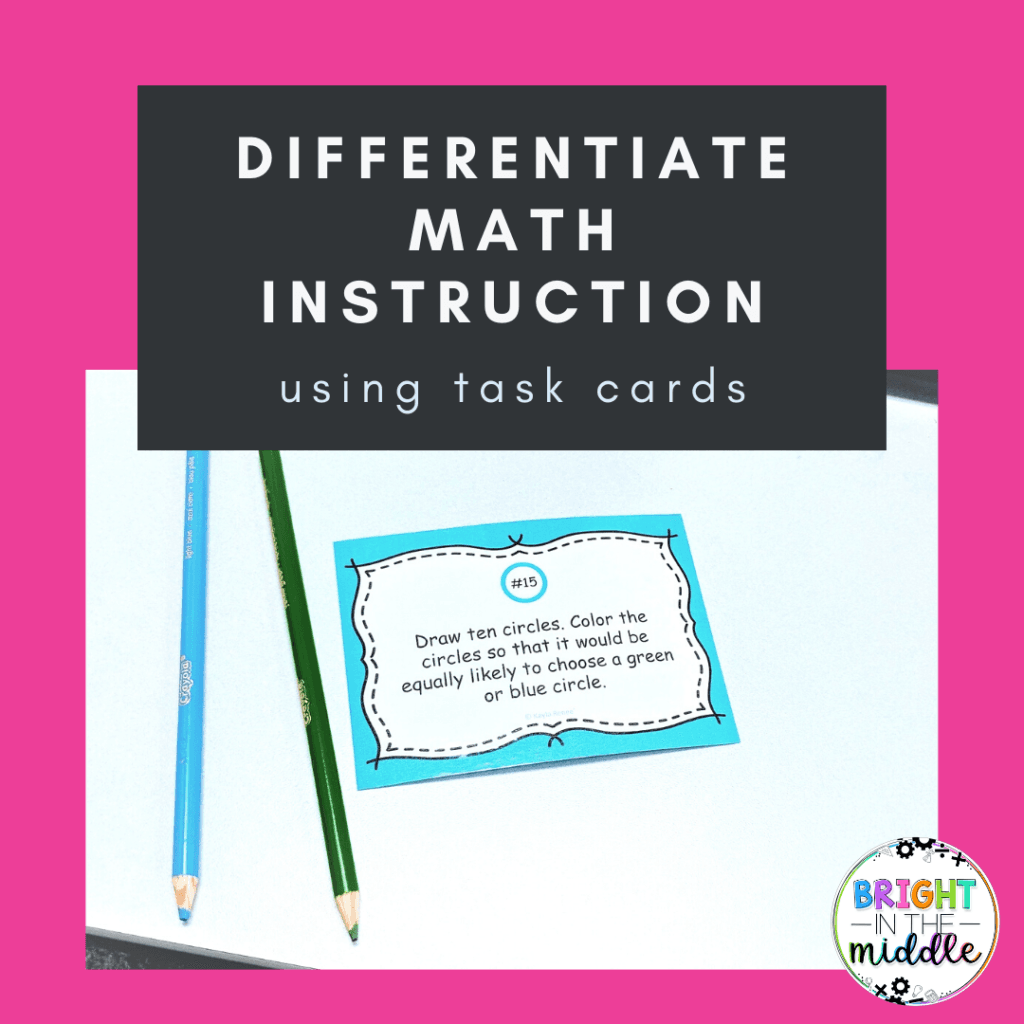
In this blog post, I will just focus on one activity that can be used to differentiate math instruction/practice – task cards! Task cards can be used in a variety of ways!
There are THREE simple ways you can take any task card set and differentiate your math classroom instruction.
1. Sort Math Task Cards by Difficulty Level:
Assign Students to Groups
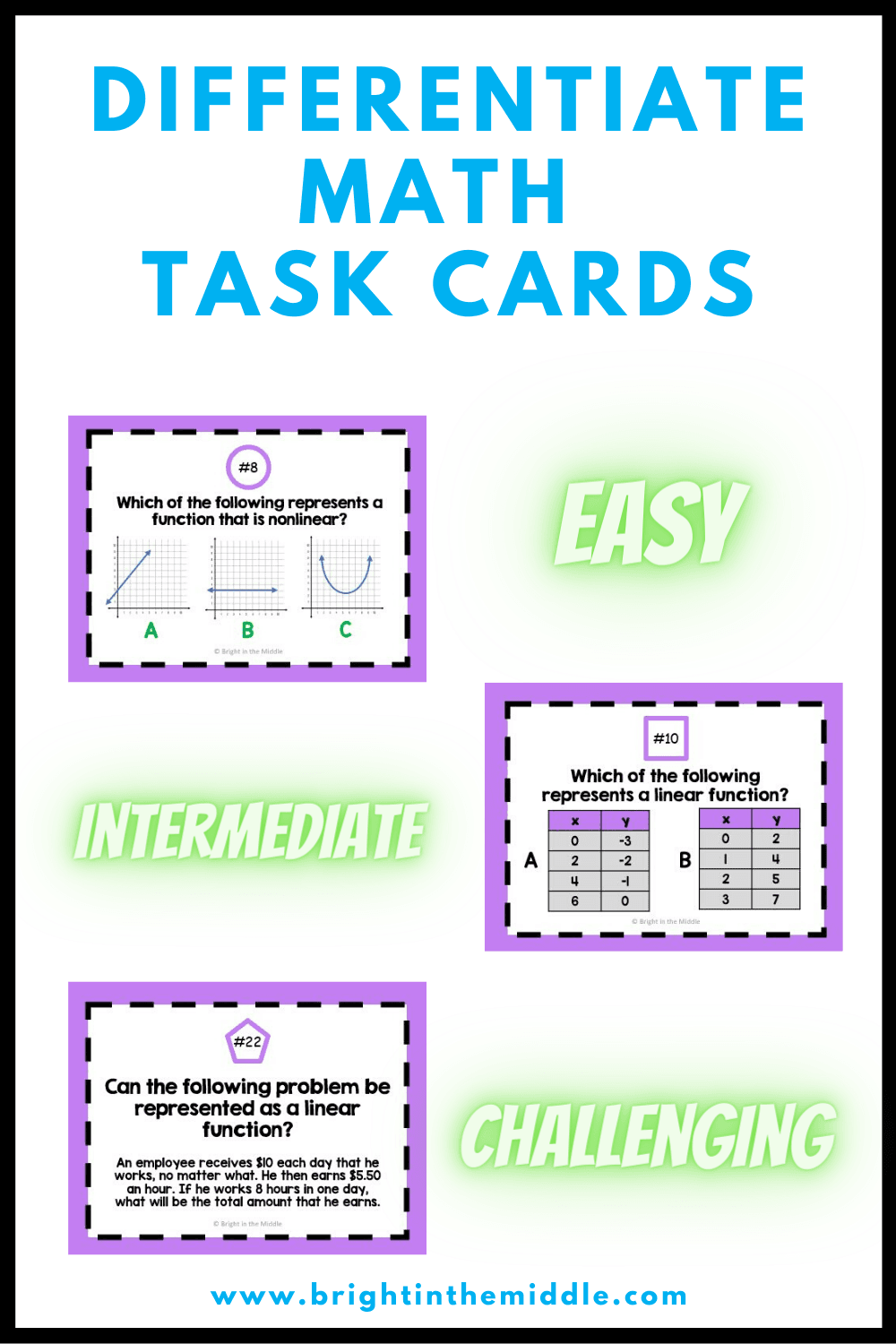
You can take any math task cards set, review the problems, and sort them by difficulty level: easy, intermediate, and challenging. This is an easy way to have differentiation in math.
You can do this by having some sort of key, whether it be shapes, colors, or something else to let you know the difficulty level of that particular task card. The students don’t have to know your coding scheme!
I use shapes: a circle for easy, a square for intermediate, and a pentagon for the challenging level of questions. I personally like to mix them up, so even if students are completing the task cards in order, they get a variety of questions. It makes it exciting!
At other times, it’s nice to put students into groups based on ability. However you choose to use the task cards, you can group students by ability and assign them a particular level of task cards.
For example, say that you are using the task cards as an around the room activity, and your students do not have enough time to complete all of them. Assign groups of students just a portion of them based on the level that you’d like them to complete.
Also, say that you are using task cards as a math center. Be sure to let the groups of students know which task cards you’d like them to complete when they arrive at that center.
2. Sort Math Task Cards by Difficulty Level:
Have Students Work Their Way Up
You can also sort task cards into difficulty levels, but instead of grouping your students by ability levels and giving them a portion of the cards, you can have your students complete all of the task cards, as many as they can, and just have them work their way “up”.
For example, whether it be a math center, test prep, scavenger hunt style, or an early finisher assignment, you can just tell your students something such as:
- Complete all of the circle task cards first.
- Then, move on to the squares.
- Once all of the squares are complete, finish all of the pentagon cards!
3. Use Task Cards for Formative Assessment
Math task cards are a great formative assessment tool to see what your students already know and what areas they need support in.
Once you have those task cards sorted by ability level, you can allow your students to work on them. You can then see what levels they are able to complete and what levels they are struggling with in order to better help them understand the missing pieces.
99 Engaging Strategies for Middle School Science
Task cards are also great for science! Need ideas to engaged and motivate your middle school science students? Check out these 99 strategies that can be used in your science classrooms to make sure that your students are engaged 100% of the time!
I love me some task cards. This is a great tip for differentiation! You can do so many things with them. 💚
LOVE task cards! They are so multi-functional and students really seem to enjoy them too!! Love how you reminded me that they can be used for assessments!