Description
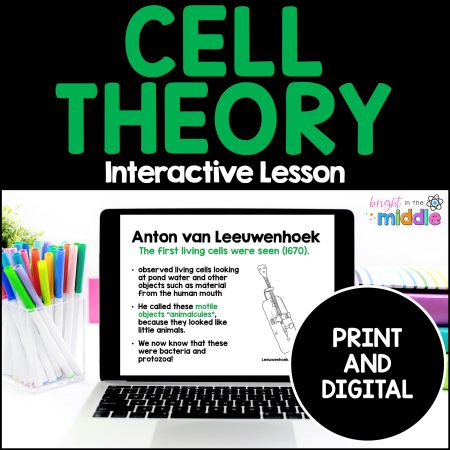
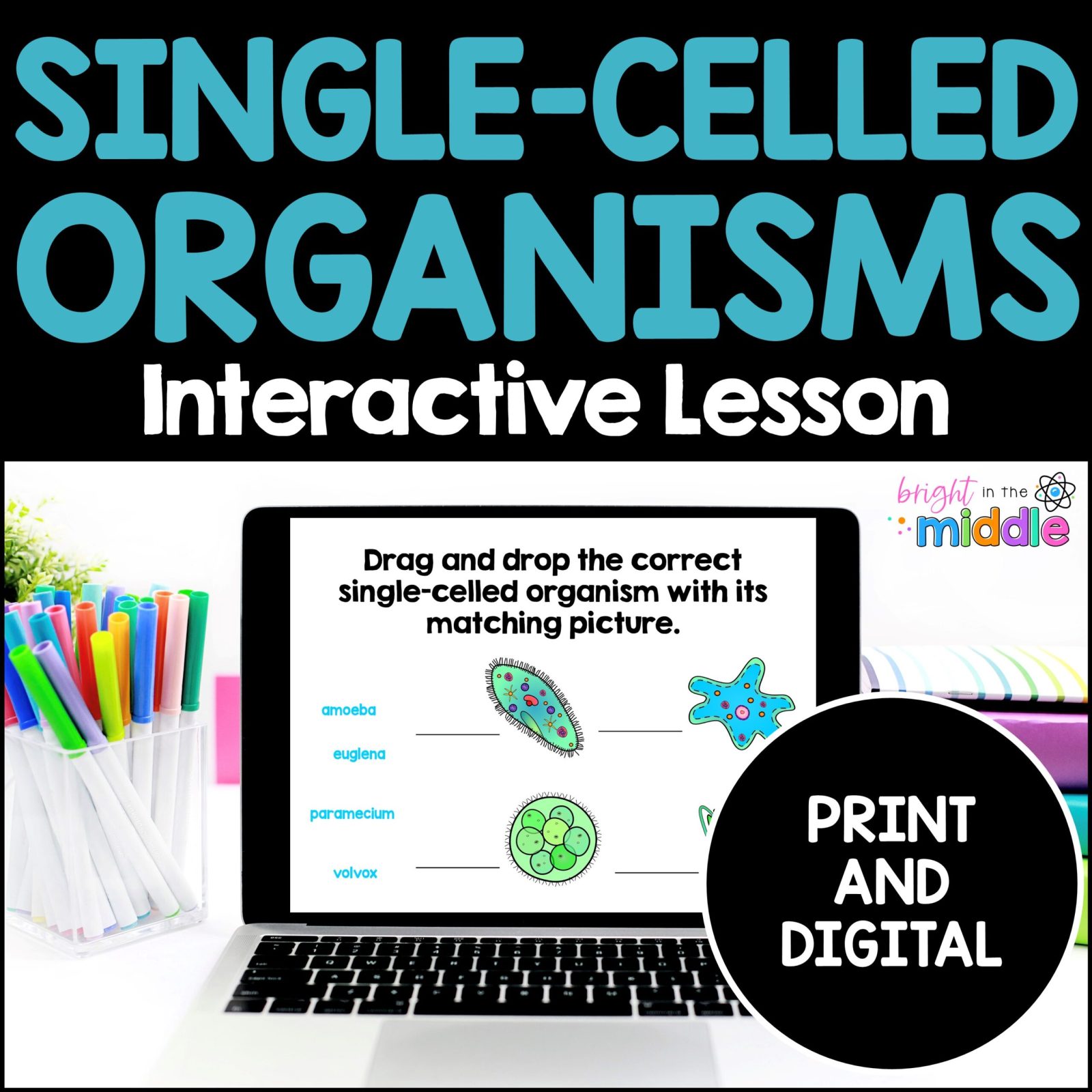
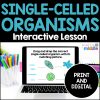
In this single-celled organisms interactive lesson, students will be able to explore examples of single-celled organisms: the amoeba, paramecium, euglena, and volvox. This interactive lesson and review is great for distance learning, small groups, direct instruction, science centers, and so much more. This will work well in Google Classroom.
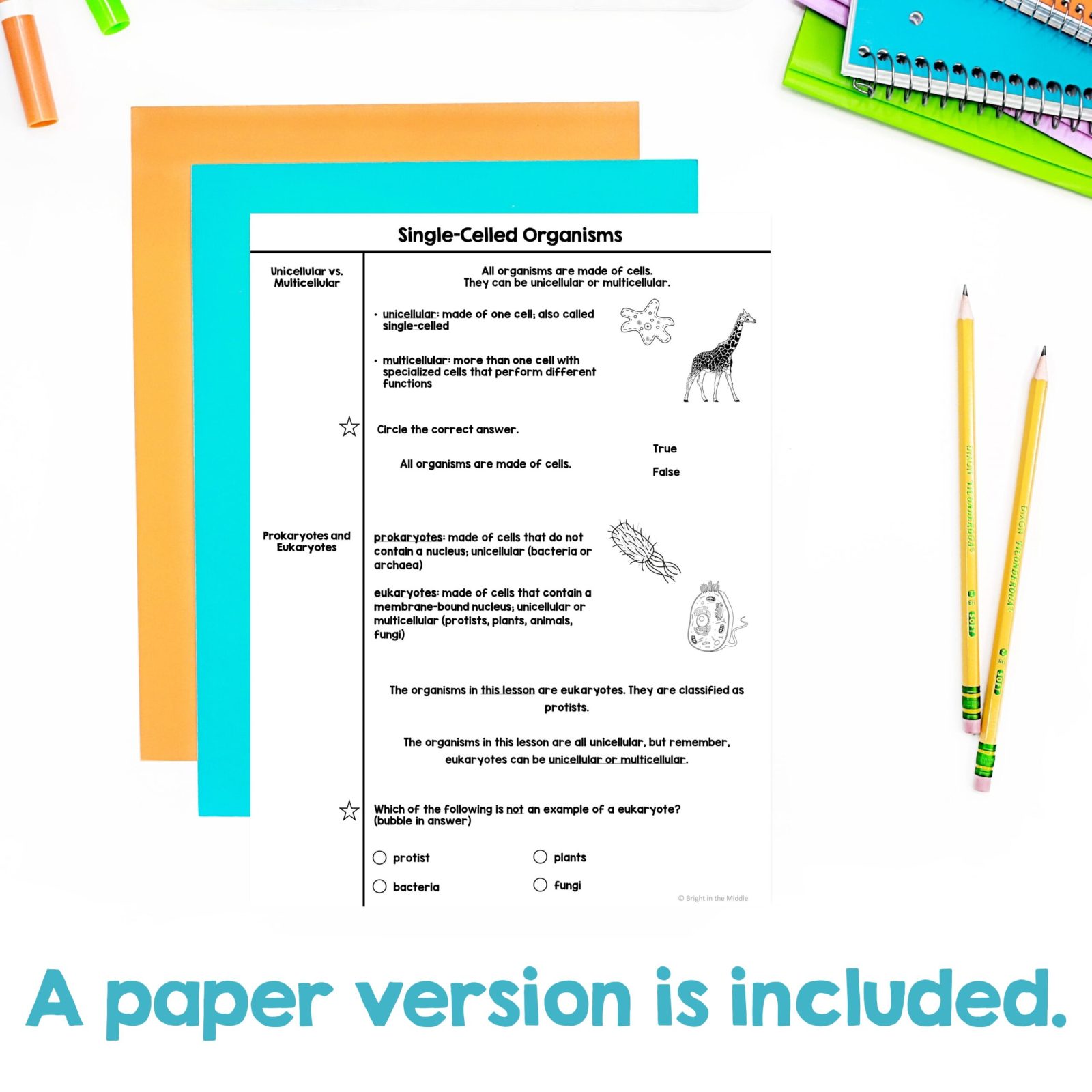
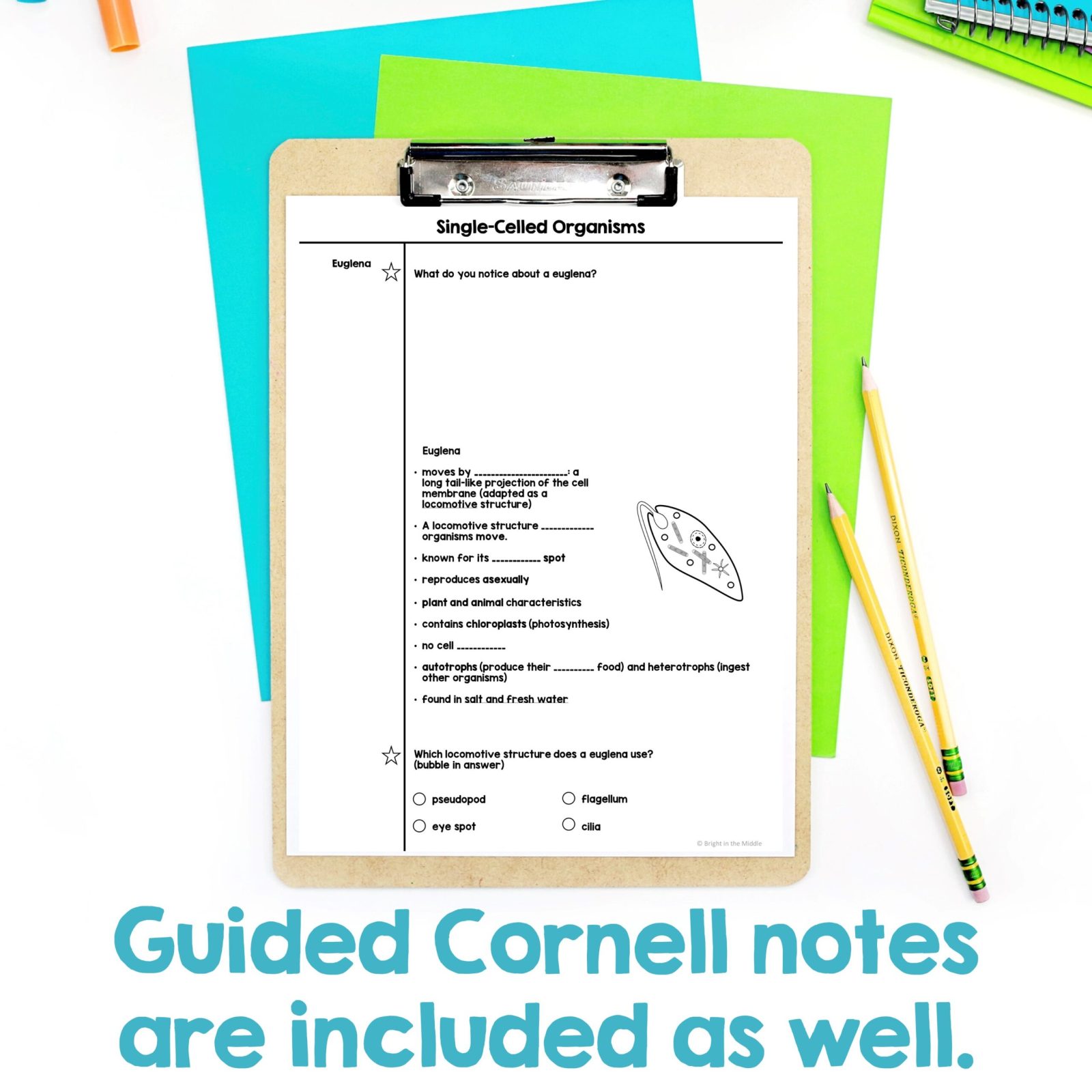
A print and digital version is included!
This lesson covers:
-
What are single-celled organisms?
-
examples of unicellular organisms
-
comparing the structures and life functions of single-celled organism
-
euglena, amoeba, paramecium, and volvox
-
prokaryotes vs eukaryotes
-
unicellular and multicellular organisms
-
protists
-
exploration of protists
-
autotrophic vs. heterotrophic
-
how these unicellular organisms obtain energy
-
and more!
In this lesson activity, students have the opportunity to complete:
-
drag and drop activities
-
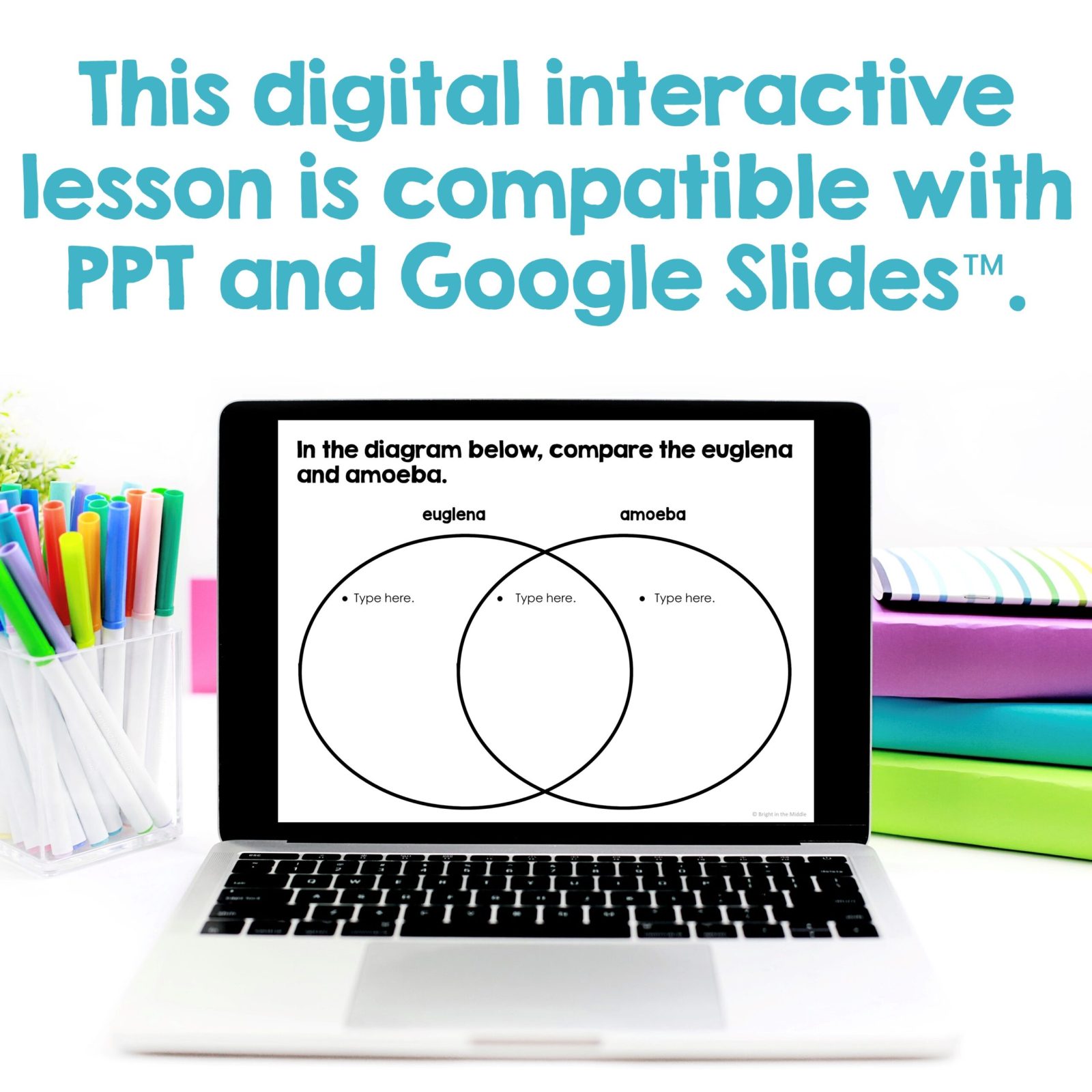
graphic organizers
-
anticipation guide
-
watch videos
-
and so much more!
This lesson aligns perfectly with 7th Grade NC Essential Standard 7.L.1.1
There are 32 slides in all, and an answer key is included.
When you purchase this resource, you will be given access to a link that will allow you to open the file that is compatible with Google Slides™. You will then be able to share this with your students. If you’d like, there is also a PowerPoint version.