If you have been following me for any amount of time, you know I’m passionate about interactive lessons! Why? Well, they are lessons that help reduce students’ cognitive load and help them actually remember the info they are given. They use the 7 steps to help students retain information. They are great to use to teach science content.
They break up the information into understandable, bite-sized pieces with check-in points to help students process the information.
Of course, they are in the Bright in the Middle Shop, but if you are interested in some of the reviews, you can check them out in the TPT shop.
When I started creating these interactive lessons, they were originally designed with a flipped classroom/in-class flipped classroom in mind. I wanted something that students could work on at their own pace, but they have grown into so much more!
Everyone has different teaching styles and favorite science teaching strategies, so I worked to create lessons that any teacher could use with any teaching style they prefer while STILL getting the benefits of the 7 steps to help students retain information.
So, if you’re wondering how to teach science using interactive lessons, here are 5 powerful ways to use them in YOUR classroom. Which is your favorite?
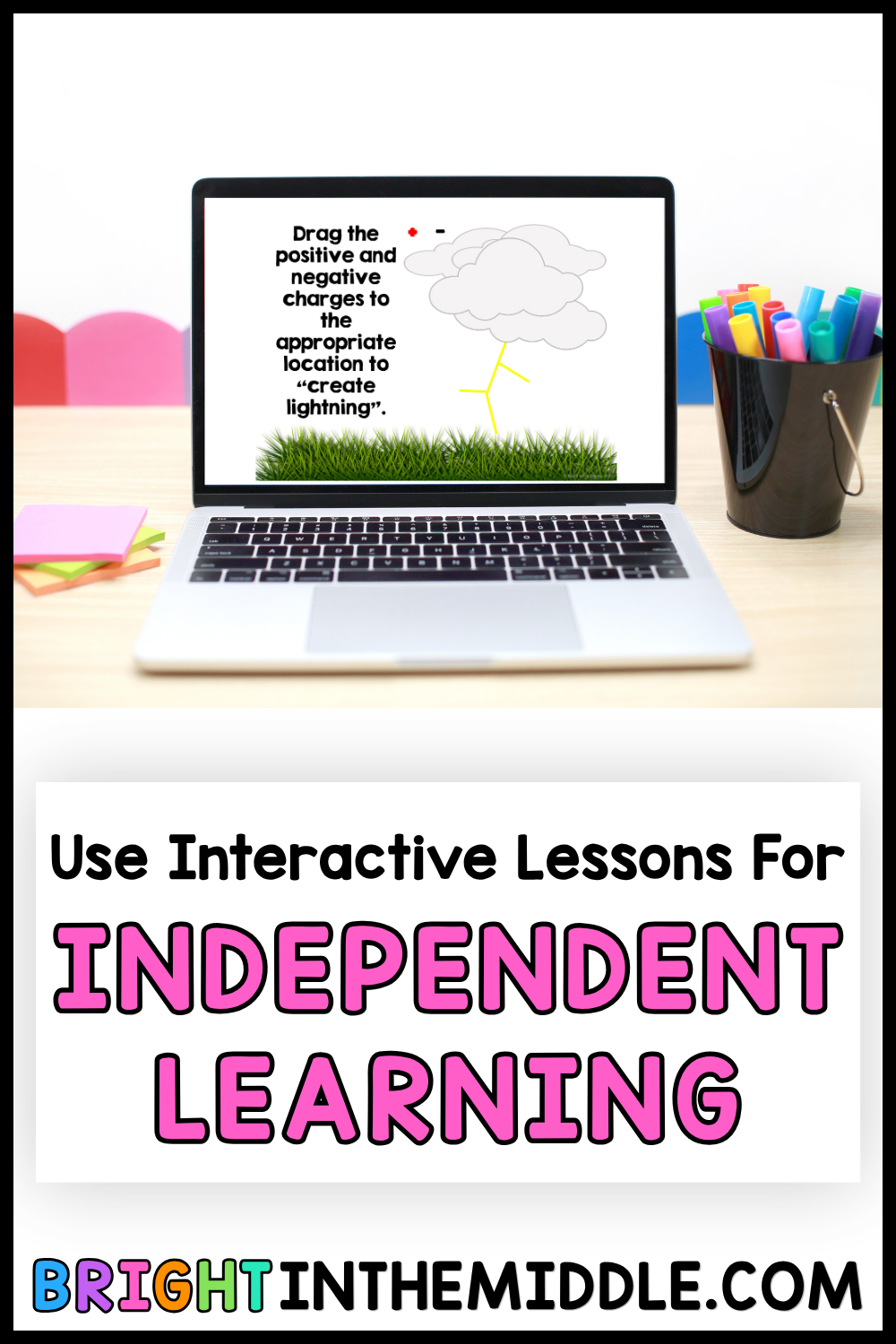
Independent Learning
As I mentioned, these interactive lessons were originally created with my classroom in mind. I used the in-class flipped model. I was kind of over the interactive notebooks because it ended up wasting so much time folding papers, gluing, and such (more on that later).
Allowing students to learn the content independently can be SO beneficial. I’m not sure about you, but a lot of the time, there is a mixture of student abilities in one classroom. You might have one student who finishes taking notes in 2.5 seconds and another student who can barely write. It’s just the reality.
Introducing new science concepts in either digital or paper form (both included in the resources) where students can work at their own pace is great. Those who finish early can move on to early finisher tasks that can extend their knowledge. I’m not talking about coloring or doing a puzzle; I’m talking about vocabulary review or simulations to help deepen their content knowledge.
Also, think about students who have English as a second language. This can be SUPER awesome for them. Inside the Bright in the Middle Membership, each interactive lesson includes an editable version. Either you or the student can use these lessons to translate them into the language they need. It may take longer, but if the students do it, they can see both the English and the second language as they are learning. So so helpful!
Now, does this method mean that the teacher isn’t doing anything? Absolutely not! The teacher is a facilitator, walking around and helping students as they go through the lesson. There are embedded questions inside, so if you notice they are getting questions wrong or flying through the lesson without answering, you can intervene.
After independent science learning, the teacher plays a huge role in extending their students’ knowledge through WIDEN activities. You can learn more about bringing the WOW Factor here.
Teacher-Led Instruction/Guided Notes
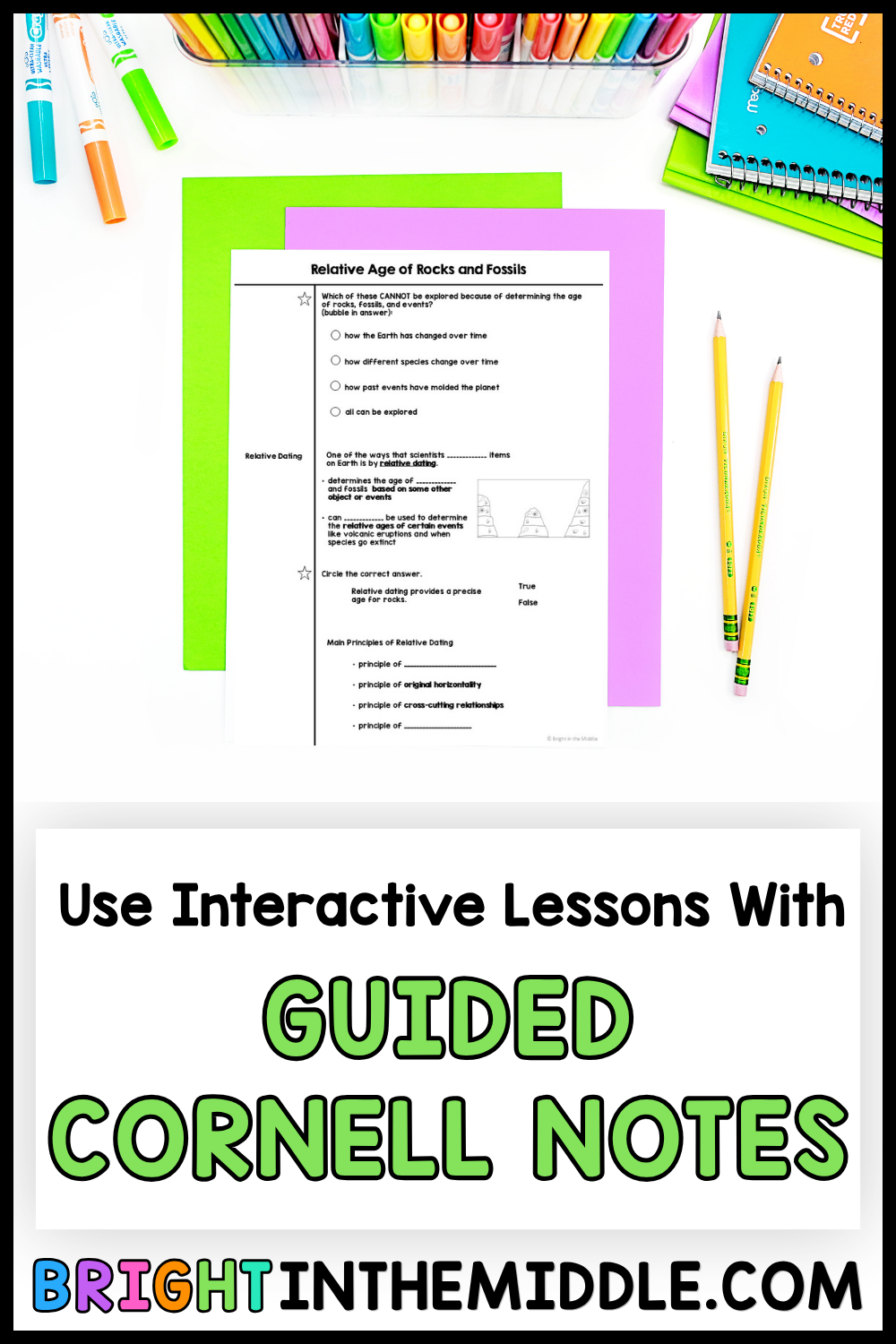
If a flipped classroom or in-class flipped classroom is not your thing, and you feel more comfortable teaching science content through teacher-led instruction, I got you! Each interactive lesson comes with guided notes. Better yet, these guided notes are research-based Cornell notes.
These science guided notes go perfectly along with the interactive lesson. As you can see in this Flow of Energy Ecosystems Lesson preview, the subtitles/sub-topics of the lesson are on the left side. Students can add more as needed. There are fill-in-the-blanks where students can stay focused and on track without having to write EVERYTHING and take up valuable class time. All images, text, diagrams, and questions are included as well.
The students’ questions for understanding and reflection are noted by stars. You can have students do these on their own, or you can work on them together.
Just as an added bonus, for students who get bored easily, the guided notes include black-and-white clipart that they can color. For some students, that actually helps them focus, and the visual with the text can help them commit some concepts to memory.
Partner Learning
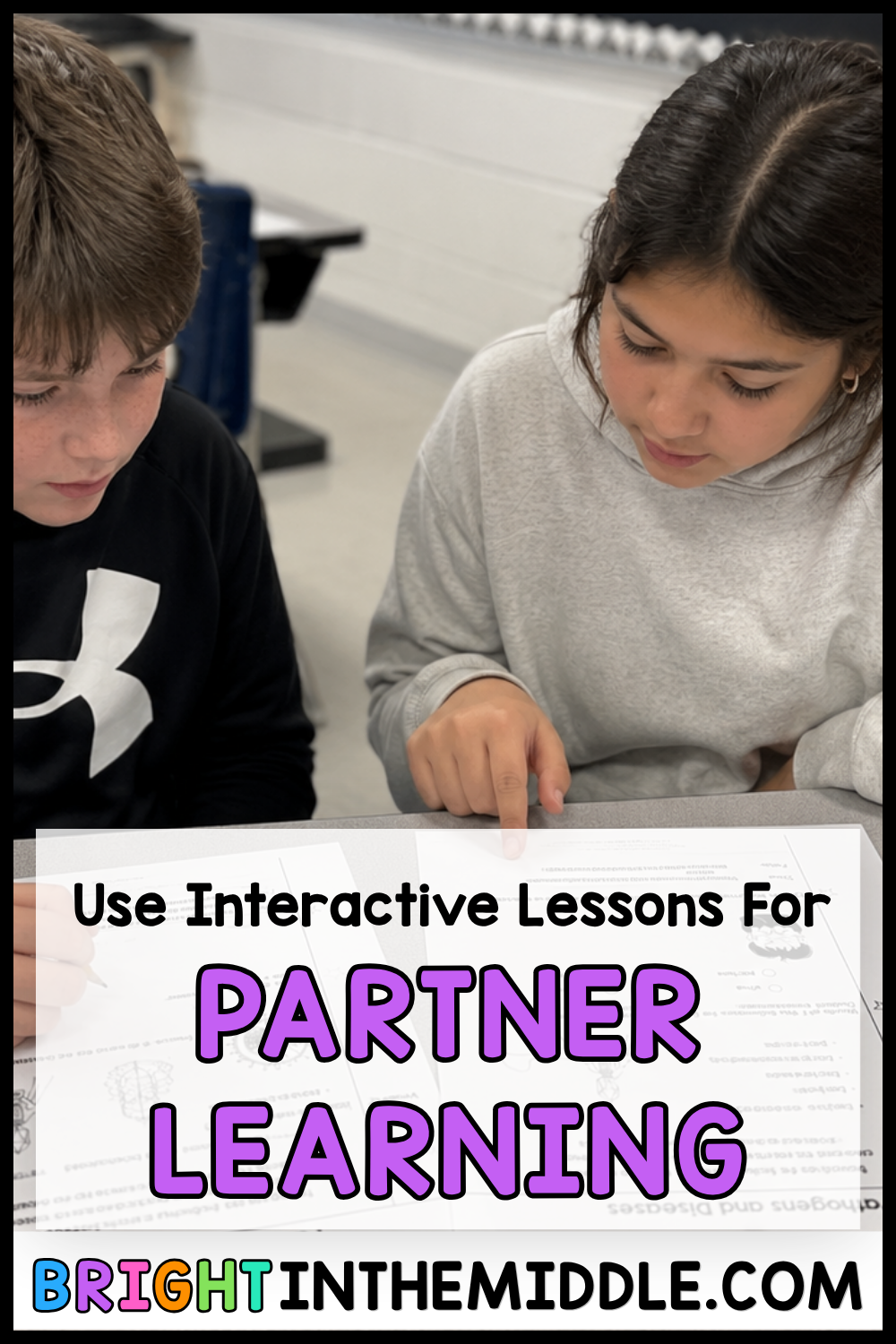
Maybe you love the idea of independent science instruction but are not ready for the flipped idea. Well, you can have students work together in partners to go through the lesson! Collaboration is HUGE for learning.
When students work together, they are helping each other learn, which makes learning stick.
This can help students explain ideas to one another in a more kid-friendly way, help each other with vocabulary, help each other catch misunderstandings before moving on, and still move at a more flexible pace than whole-group teacher-led instruction.
As you can see in the Moon Phases Interactive Lesson preview, each interactive lesson comes with a paper version and a digital version. Students can go through the lesson together, answer the questions together, and reflect together.
If students are working at a voice level 1, this can be a powerful way for science content delivery.
It’s really the best of both worlds. You have the independence and self-paced learning with built-in support from a classmate. This can actually give you more freedom to help those who really need the extra help!
Modified Interactive Notebook
I know there are a lot of interactive notebook lovers out there! Something about an organized composition book makes the teacher brain so happy! Although I moved to an in-class flipped approach, I did love the interactive notebook.
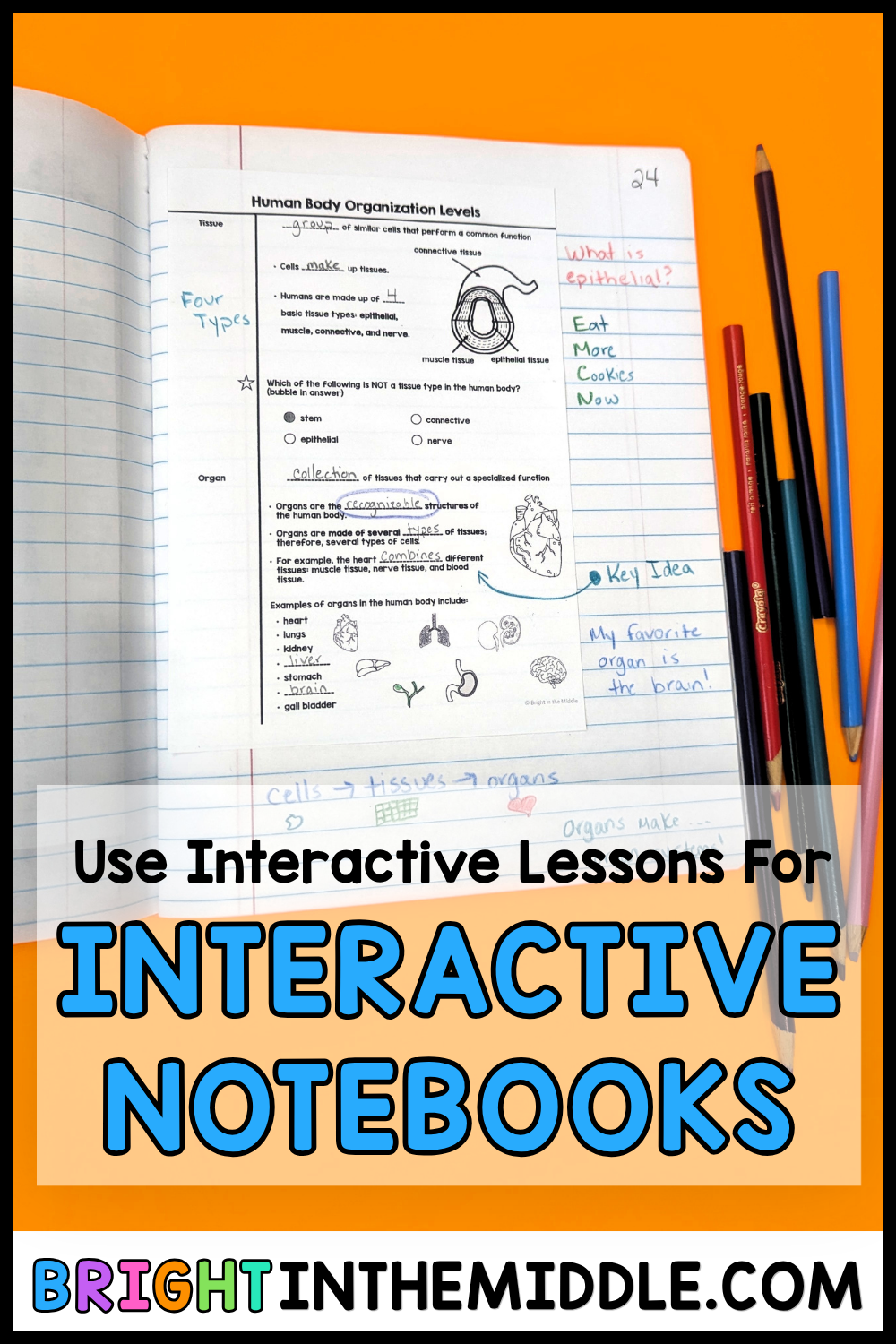
It took up more time than I like, but it still had its benefits. Interactive notebooks make a great study tool, support visual learners, and help students interact with the content. You can use the guided notes inside a notebook and get the SAME benefits without all of the cutting, gluing, and time-consuming things.
First, you can print the guided notes on half-pages, and then students can glue them into their notebook.
On the page itself, students can do all of the things already required like fill in the blanks and answer the questions, but they can also:
- Circle or highlight important vocabulary
- Underline important facts
- Add arrows or symbols to show important connections
- Add small notes
- And more
On the sides or around the page, students can:
- Make quick sketches to connect to the topic
- Add important ideas!
- Add “remember this” sections
- Write questions they still have
- Write memory tricks or acronyms
- Paraphrase
- Add quotes
- Add data
- Make concept maps
- Create their own quick flaps
- And more
Review Stations
Ok, so the reality is, you may love interactive lessons and all of the research-based strategies included in just a few slides, but your school has already purchased a curriculum that you MUST follow. I get it. That’s another post for another day (can’t they trust teachers to be professionals and choose what’s best for their classroom?…)
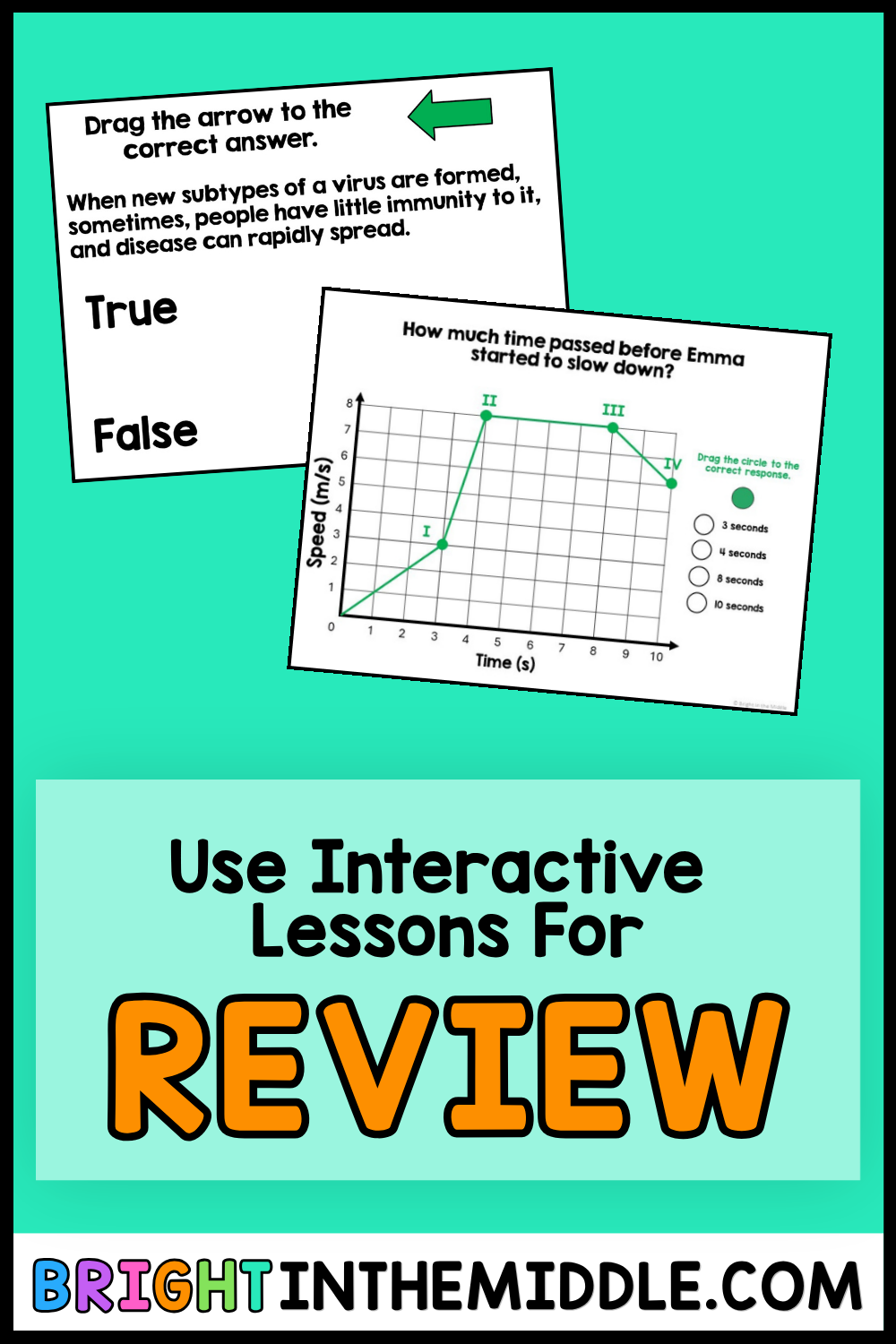
Well, interactive lessons also make a great review! They can be a great reminder of everything they’ve learned.
You can either give them one lesson to go over, such as the Heat Transfer Interactive Lesson, or you can just pull the questions out of the slides and let students answer the questions from multiple lessons. For example, in addition to the heat transfer lesson, you can pull questions from Thermal Expansion and Contraction Interactive Lesson, Conductors and Insulators Interactive Lesson, and Electric Circuits Interactive Lesson before you give your students a test on thermal and electrical energy.
So, in addition to different ways to deliver content, they make a great review!
These interactive lessons can fit into so many different types of middle school science instruction.
Leave a Reply